
RFP05: Nut Substitutions

By The Rawtarian

In this episode The Rawtarian goes into detail about how to make nut substitutions in raw food recipes.

To listen to the podcast click on the photo/play button above or save the MP3 to your own computer.

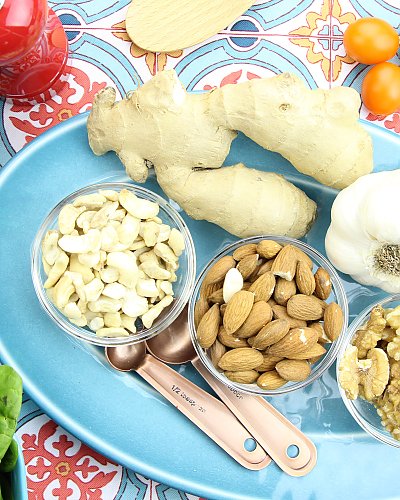
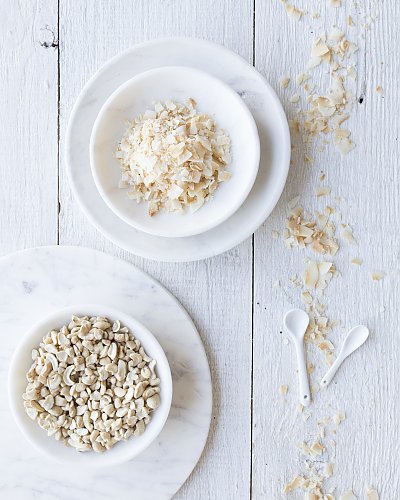
In this podcast I outline three main groups of nuts/seeds:

  • creamy nuts: cashews, macadamia nuts, pine nuts, etc.
  • flour-like nuts: almonds, sunflower seeds, hazelnuts, pumpkin seeds, etc.
  • oily nuts: walnuts, pecans, etc.

This is an information-packed podcast, and hopefully it's not too confusing!

Download Podcast

Click the button below to download the mp3 podcast file.

Download Podcast

Podcast Transcript

Hello, and welcome to Episode #5 of The Raw Food Podcast.  I’m your host, Laura-Jane, The Rawtarian, and in this episode we’re going to be talking about nut substitutions in raw food recipes. Stay tuned, and I’ll be back with you shortly.

WHY SUBSTITUTE NUTS?

Thank you so much for joining me on this - it’s Episode 5 of the Raw Food Podcast, and today we are talking all about nuts. Why are we talking about nuts? Well, as you know, with my simple, satiating, satisfying recipes at therawtarian.com, I do use quite a few nuts, which are usually quite popular recipes for people who are new to the raw food diet. People who have been doing raw foods for years and years usually phase out those heavier nut-based recipes, but I know that, for me, when I first went raw about two and a half years ago, they were really, really important to me, and I still do enjoy having them occasionally. I get quite a few emails and questions about nuts and seeds, and one of the main questions I get has to do with nut allergies. A lot of people might say that they have family members - especially kids - in the house who might have a tree nut allergy, so that was one of the reasons I’ve been thinking about nuts lately. I’ve got a lot of people asking me, “What kind of nuts can I substitute in such and such recipe?” So that’s what got me starting to think about nuts, but I think this episode is really relevant to anybody who’s interested in eating healthier raw food diets that might include nuts and seeds. What I’m going to be talking about today is the idea of substituting different nuts and seeds for other ones - but it’s not only because of allergies. It could also be because maybe you’re at home and you're in a rush and you don’t have a certain nut or seed and you’re wanting to make a quick substitution to save you a trip to the grocery store. And another thing too: it could be that you’re trying to keep your budget down in terms of spending less (spending less is always a good thing!), and so sometimes you might find that prices fluctuate where you are, and you might be able to get a better deal one week on a certain type of nut. Or, I know, in my case for example, pine nuts where I live are super, super expensive, and I just don’t even use them. But I’ve learned that if I see pine nuts in a recipe, I know that I can substitute a different nut. And so these are really important skills to have - the skill of course being knowing which nuts and seeds you can substitute for one another.

TREE NUTS

So I was doing a little bit of thinking about this before I turned on my microphone this afternoon, and I jotted down the fact that there are three types, or groups, of nuts. I’m going to go into those three groups. And usually the nuts - or sometimes seeds - within each group can be swapped out for one another. I’m going to go into those three types of nuts in greater detail shortly, but I think I’ll also just start by talking about tree nuts. I know that people do have a lot of tree nut allergies, and that seems to be something that’s more common nowadays, especially in children. We do find, as well, that we have to be careful when we’re bringing foods to potlucks or sending children to school with some raw recipes or some raw cookies or raw brownies and that type of thing. You do have to be mindful that there are a lot of people out there with allergies. Now I don’t have any allergies myself, and nobody in my immediate family has an allergy, and I’m certainly not an expert on tree nut allergies, so, by all means, I just want to put that out there and make sure that if you do have a serious nut allergy, what you know is probably better than what I know.

But I do know that there’s a huge list of what’s called tree nuts, and that actually encompasses a lot of different nuts. I think that can be anything from almonds, cashews, macadamia nuts, pecans, pine nuts (which I mentioned earlier), coconuts, filberts, hazelnuts, Brazil nuts, pistachios… the list goes on, and I could sit here and read a really long list, but I don’t think you’d find that too interesting, now would you? There are a ton of nuts out there, and once you include seeds, too, it really is quite a big topic. Anyway, we won’t go too much into the tree nut detail, but I think it’s really important to know. So those tree nuts that I mentioned - people are often allergic to those - and of course you have peanut allergies as well - which, interestingly, does not seem to be a tree nut, but perhaps that’s a separate allergy. I don’t know, but if anybody’s an expert on that, I’d be interested to hear your experience from a personal perspective if you have a really severe nut allergy in your family.

CREAMY NUTS

Let me go back to those three concepts of nuts that I was mentioning at the beginning. The first one I’m going to call creamy nuts. If you’re familiar with my recipes, you might even be able to think in your head of some ideas of recipes that may use creamy nuts. When I say “creamy nuts,” all I really mean is nuts you can use in a recipe to give it a creamy, almost dairy-like substitution. Some examples that I thought of here of creamy nuts would be cashews, which are - oh gosh, I shouldn’t start explaining each nut or this episode will get really long! But basically you’ve got your cashews, you’ve got your pine nuts, and you’ve got your macadamia nuts. Those are all whitish colored nuts, and they’re very high in fat, and they’re very creamy. Some examples of recipes that may use creamy nuts would be my raw cheesecake recipe that I have. My favorite nut is the cashew, so a lot of my recipes do contain cashews. You’ve got my cheesecake recipe, you’ve got my alfredo sauce recipe…what else? There’s oodles of them. I’ve got a lot of icing recipes, like white icing you’d put on a raw cake, and that type of thing. So those are those creamy nuts, and pretty much you can generally substitute cashews and pine nuts and macadamia nuts and kind of use them interchangeably. It will definitely change the flavor, for sure, and when I’m using macadamia nuts, I always soak and rinse them very well, because I find that it affects the taste. I know - as raw foodists, we’re supposed to soak and sprout and dehydrate all of our nuts, and I love you if you do it, but I don’t do it all the time just because - you know me - I am busy and don’t always do that. But with my macadamia nuts, if I, say, have run out of cashews and I want to use some, I definitely soak them, because there’s kind of this bitter taste that is toned down a bit if you soak it and rinse it really well before you use it. So those nuts can be changed quite easily.

As you’ll notice, when I kind of rambled on at the beginning about the list of tree nuts, those three creamy nuts that I’ve identified are actually all tree nuts, and so there’s really no good substitution - that I’m aware of anyway - for those nuts, so if you see a recipe that has… Let’s just use a specific example: my cheesecake recipe. It basically calls for (I don’t have it in front of me) probably two cups of cashews or something, so if you have a child who can’t have tree nuts anywhere close to them, I don't have a good suggestion for you in terms of making a substitution for that recipe. The only good ideas for substitutions that would actually work really well would be other tree nuts that are also creamy. That can be a difficult one.

Now, it would not be a good substitution in a cheesecake recipe, but, depending on the recipe, quite frequently, instead of cashews, you might be able to substitute an avocado, for example, because an avocado can actually produce a really creamy, sort of fatty consistency as well. I would never suggest making cheesecake with an avocado - even for a raw foodist, that’s a little bit out there. I have a lot of soup recipes that are really simple. They’re some cashews, some vegetables, some water, and you mix it up, and they make really awesome, creamy soup flavors. An example might be tomato soup, where you've got some tomatoes, some cashews, and water, and probably some salt and a few other things. You would blend that up in your high speed blender (like a Vitamix). In that recipe, you actually probably could substitute avocado instead, and it would still have that really lovely, thick, creamy texture. In that example, that would work really well. This is a very long-winded way of saying that it’s really hard to find good substitutions for those creamy nuts like cashews, pine nuts, and macadamia nuts. Sometimes avocado will work, sometimes hemp hearts or hemp seed - you can find these at the health food store. They’re like these tiny little disks, almost, and they’re really oily and fatty. I forget where they’re from, but they’re hemp hearts or hemp seeds, and they’re very expensive. Depending on the recipe, you could explore that as well, because they can give a nice creamy consistency as well.

FLOUR-LIKE NUTS

So that was the first group of nuts that I wanted to talk about - those creamy nuts. The second group that I got to thinking about - I was thinking about what I do in terms of substituting nuts in recipes, and I identified this concept of flour-like nuts (that’s F-L-O-U-R, flour). When you think of a recipe from the standard American diet where you have flour in a recipe - cookies or something - the flour isn’t really producing a taste, or even really a specific texture or anything; it’s almost more like filler, in a way, or it’s something that’s going to absorb the other ingredients and make it less runny and that type of thing. I’ve noticed in a lot of raw food recipes that you’ll often find almonds and sunflower seeds will often be called for in a flour-like consistency, and sometimes you might find that you’re actually using it like flour. In some recipes it will say, “Take one cup of almonds, and turn it into almond flour,” basically, right? So you could, in your coffee grinder - a clean coffee grinder that you only use for nuts - turn almonds into flour. And, similarly, a lot of recipes will call for sunflower seeds to be used in this way. In these types of recipes you can easily substitute other nuts and seeds for flour. I’m not saying, “for flour,” but I’ll give you an example where you have almonds acting like a base, or a bulk, or a filler. You can frequently substitute sunflower seeds for the almonds if you don’t have almonds or you don’t like almonds, or that type of thing. And sunflower seeds can be really handy as well, because often they’re quite inexpensive, so if you can make a substitution with sunflower seeds, that can sometimes cut your costs down. But you do want to be careful that sometimes sunflower seeds don’t grind up that well. So quite frequently I might turn the sunflower seeds first into a sort of sunflower seed flour, which sounds really complicated, but it isn’t. I just have a really cheap blender - it probably cost me about twenty-five dollars. I bought a brand new coffee bean grinder. It’s quite small, just like a little cube with a cap on it and a blade, and I use that to grind smaller things. So sometimes I’ll make sunflower seed flour in there, just when I need it. I don’t keep it in a container or anything, as flour; sometimes it’ll just grind up better that way.

So an example of a recipe that I’ve flagged in my head where the nuts really are used only as flour is a… what was I going to talk about here? Oh, I think maybe my onion bread recipe - yes! This does require a dehydrator, but they’re very delicious if you ever are in the mood for a pliable onion bread, or onion wrap, almost. This is a good example. This recipe calls for three large onions, one cup of ground sunflower seeds, one cup of flax seeds, some olive oil, and a few other flavorings. Just to recap, you’ve got onions - which are really wet - and olive oil (also wet). Then you’ve got one cup of ground sunflower seeds - and really they’re not there for flavor - you could certainly use ground almonds instead. It’s there to absorb some of that extra moisture from the onions and the olive oil. And the flax seeds, they are ground as well. You don’t really want to remove flax seeds from recipes, because flax is a binding agent. That’s just a fancy way of saying that flax helps the recipe to stay together or stick together, so you don’t really want to be taking flax seeds out of a recipe if it calls for them. Sometimes you can substitute - I hope this isn’t information overload for you - chia seeds, because chia are also a really good binding agent as well. So that’s the concept of flour-like nuts. I think, really, almonds are good for that, sunflower seeds, and any sort of drier tree nut as well - maybe hazelnuts could be good for that. (I don’t use them frequently. The main ones I keep around are usually almonds or sunflowers - sunflower seeds, rather.)

OILY NUTS

So we had the first category, which was the creamy nuts. The second one we just talked about, which was the flour-like nuts, and then the third category that I see as different would be oily nuts. For me, predominantly those would be walnuts, pecans, and Brazil nuts. I don’t use Brazil nuts that frequently, but I do keep them around on occasion and they can be handy. They’re also quite oily as well, so they work well. Some recipes will call for a few ingredients, like pecans, but what’s really important about the choice of that nut in a recipe is probably because the pecans have a lot of oil in them. I’ll give you a good example: my brownie recipe. It’s a really simple recipe, and it just includes nuts, dates, cocoa powder, coconut, and a few other things. So it’s really like nuts, dates, and flavoring. In my recipe, I call for pecans. One of the crucial things about using pecans in this exact recipe is they will produce natural oils. Actually, the brownies will get really oily, and it’s kind of surprising, because it’s like, “Where did this oil come from?” But it comes from the nuts, and so that’s why, when you’re substituting nuts in a recipe, we use this example: the recipe calls for pecans. You could use walnuts, because they’re also quite oily and they’ll give the same consistency. But I would never use almonds in that recipe, because almonds are much drier and they have less oil, and they just won’t produce the same consistency. So the three main oily nuts that I kind of use interchangeably would be pecans, Brazil nuts, and walnuts. All three of those have a different flavor, and they certainly will impact the flavor of the final product, but they will at least give you a similar consistency. I think that statement - what I just said about those - is really applicable across the board in that you’re always going to change the flavor. Even when I think back to the creamy nuts, like cashews versus macadamia nuts, if you use one or the other, it will change the flavor. You may prefer one flavor over another, but odds are that the texture is going to be quite similar. So that’s why I’ve grouped them together like this and why you can substitute some nuts for another.

WRAP-UP

So I know that almost started to feel like math, but I think once you really grasp these things (and these aren’t things you really need to commit to memory or even worry about), overall, what I’d like you to take away from this - especially if you’re new and trying to figure out what you can substitute and what you can’t - is just think about these three general rules. The creamy nuts are just white or cream-colored, as well - that’s an easy way to remember it. I mean creamy as in texture, but they also happen to be a creamy color as well - so that’s a good way to remember that you can substitute like-colored nuts in that example. I think the flour-like nuts - that one isn’t quite as big of a deal breaker, because usually they’re just there for filler, so it wouldn’t be as big of a deal if you, say, put cashews in that one, but that would almost be a waste, because the creamier nuts are much more expensive. So you wouldn’t really want to just throw in creamy nuts into something that doesn’t really need to be creamy (although everything is better when it’s creamy in my opinion).

I think that’s the real takeaway here: if you are experimenting in your raw kitchen, you can certainly just go with the flow and try it, and see how things work out as well. I think it’s just a case of experimenting and experiencing, and if you can try to just keep those three categories in mind and think about, “What’s the purpose of the nuts in this recipe?” it can be really helpful. In terms of substitutions in general, it’s something you’ll realize - and I can even think about this in the case of a green smoothie. When I first went raw, the very first book I had (which is a great book, and I totally recommend it - it’s called “Uncooking with Raw Rose” and it’s a really good basic book, and if you’re really just introducing yourself to raw, maybe even in this podcast, it can be a really good start) - but anyway, my point was, when I first started cooking with my food processor and my blender, I did not know anything, and I religiously followed recipes. Fast forward two and a half years later, and I’ve probably made hundreds of smoothies now, and I don’t use recipes anymore, because now - not because I’m smart, and not because I even tried to pay attention at all - I just know that having 200 smoothies, or actually way more than that, I would think - I know that a smoothie needs a certain amount of liquid, a certain amount or ratio of fruit, and a certain ratio of vegetables - that’s what makes up a green smoothie. So if I take out strawberries and I put in cherries instead, that ratio is going to be fine. It’s the same thing with nuts and seeds. It’s really not something you need to worry about today, and I hope if you’re new you’re not feeling overwhelmed - because it’s not even something that you really need to consider. But it can be useful when you’re just starting to navigate the waters of starting to make substitutions to know that there are certain nuts that are more easily substituted for other nuts.

I hope that you found this very specific nut episode helpful. I think that I probably did go into quite a lot of detail, and that was probably a lot to absorb if you were driving or trying to do multiple things at once. What I will do is write those groups down on the show notes. If you go to therawtarian.com/podcasts and then make sure you’re looking at Episode 5, you’ll see the groups of nuts in there already down so you don’t have to try to fill your brain too much with that information. Again, I think the first thing to do in short sequence is if you’re interested in raw foods and haven’t started yet, pick yourself up a food processor if you don’t have one. And then, secondly, if you’re really into raw and you’re loving it, and you’re excited - which you must be, if you’re listening to this podcast - do yourself a favor: if you can afford it, get a high-speed blender. So all this nut stuff is really specific, and if you’re just getting started with raw, don’t worry too much about that. I think that one of the key pieces to success in any aspect of your life - be it health, or your career, or any kind of goal you have - is it’s great to absorb as much as you can, but I love this concept of “just-in-time learning,” which basically means that you are going to learn and absorb material that’s the right material for you at the exact moment. So if you’re listening to this, and you’re like, “Oh my gosh, I can never figure out all this nut stuff; I’m never even going to bother trying a raw food recipe,” that’s probably because you’re not really feeding yourself with the right information that you need at the right time. And I think that’s why I’m adding this little piece at the end. If you’re just starting, don’t even worry about this. It’s all incremental learning, and you learn it as you go. And, by all means, you can listen, and I love for you to listen, but I just want you to feel like you don’t need to feel overwhelmed because I’m trying to keep things simple and it doesn’t have to be complicated. So this is kind of a funny episode, but I hope you enjoy it, and I will certainly share it with you because I really enjoyed recording it and I do think there’s some valuable information in it, and I hope you found it useful.

You have been listening to The Raw Food Podcast with your host The Rawtarian. Be sure to visit me at therawtarian.com where you can browse over one hundred of my absolute favorite simple, satisfying raw recipes that you’ll find quick to make and that contain only a few ingredients, and of course they taste spectacular. While you’re there, be sure to sign up for my e-newsletter, and once you’ve signed up for that, you’ll get a PDF copy of eleven of my most favorite, most satisfying, and most delicious recipes including Raw Vegan Alfredo Sauce, Raw Brownies, and a whole host of other delicious recipes that you can make at home that are raw and taste amazing. Thank you so much for joining me, and I hope to hear from you very soon. Until next time, enjoy your raw adventure.

RFP04: Food Processing

By The Rawtarian

To listen to the podcast click on the photo/play button above or save the MP3 to your own computer.

In this episode of The Raw Food Podcast, Laura-Jane the Rawtarian dishes all the dirt on making raw food recipes in a food processor! What's a food processor, how is it different from a blender, do you need both, and some examples of recipes you can make in a food processor.

I recommend a food processor to buy online here. However, you do NOT need a specialty food processor. So you will get the best bang for your buck by wandering in to your local big-box store and just buying any old food processor off the shelf for around $50-$60 dollars. Just make sure it has at least 6 cup capacity, if not bigger. 

Some recipes mentioned in this episode:

I also tried to improve my audio settings a bit. Still not that great, but you know me. Fake it 'til you make it! Slow and steady improvements... :)

Download Podcast

Click the button below to download the mp3 podcast file.

Download Podcast

Podcast Transcript

Hello, and welcome to episode number four of The Raw Food Podcast. I’m your host Laura-Jane the Rawtarian, and in this episode we will be talking about food processing. What is it, how is it different from blending your whole food meals, what kind of recipes can you make in a food processor, and lastly I’m going to end with a really quick, handy tip for how to keep your food processor cleaner when making recipes. Stay tuned, and I’ll be back with you shortly.

Thank you so much for joining me. I’m really excited about this; it’s episode 4 of The Raw Food Podcast, and today we’re talking about food processing, which is a huge part of my life as a raw foodist or raw vegan. I tend to make a lot of different dishes in my food processor - that can range from nut pates to sweet desserts, and it’s a really huge part of my world as a raw vegan.

What is a food processor?

So what I’m going to talk about today first is, just what is a food processor? Before I went raw, I came from a wonderful happy household, my parents were fabulous, but they weren’t really much for being chefs in the kitchen. And so when I was growing up, we didn’t even have a food processor so it was all new to me. What it basically is it’s kind of a plastic dish with a large blade; they call it an “S blade”, and it sits in the bottom of the bowl and spins around. There’s a lid on top, which basically keeps everything inside. It’s pretty simple, and there’re actually not very expensive. You’ve probably heard me say this before in terms of eating whole foods that it’s really important to get a super-expensive fabulous crazy $500 blender but you don’t need as similarly good food processor. My food processor that I use everyday cost me, I think around, $50 and I’ve had it for almost 3 years, and it works fine. And you definitely do want to get one that can handle at least 6 cups of food. Sometimes you see those really tiny food processors and they can be handy, but that can’t be your main food processor because it’s just too darn small.  So that gives you an overview of what a food processor is.

Difference between blenders and food processors

Another really common question I get asked when people are equipping their raw food kitchen is the difference between blenders and food processors, and they’re kind of already feeling overwhelmed with this whole new lifestyle and they’re asking me, do they really need to have a blender and a food processor? If you think about it, they’re both plastic containers and they both have a big blade in the bottom, and come on, do you really need both?

And unfortunately, even though I’m a total realist, and I love to keep things cheap and quick and dirty, you do need both of those items. The huge and substantial difference is really simple..

A blender is used for wet, liquid stuff. You know, things like smoothies, and sauces, and pudding, and icing , and all that stuff that really needs to be smooth, soups things like that; it’s all really liquidy stuff and that’s what a blender is used for.

On the other hand, a food processor also just have a big blade, but it is used for drier things like, not for soups or that type of thing; it’s used for drier recipes like brownies, or cracker batter, or nut pates, or pie crusts, things that aren’t soupy or liquidy; they’re still moist but little bit chunkier and you really can’t substitute one for the other. It just doesn’t work.

If you’re still just starting out you need a super expensive blender and I really do stand behind that. Even though I’m the cheapest person on the planet, I do have an expensive blender. But I also realized that we have to be real here, and if right now say you’re a college student or really on a tight budget, and you don’t have either of those things, I would say just go to Target or your local big box store and get a cheap food processor, $50. That will last you, it might die because it‘s probably kind of crappy but that will last you for a while.

And then start out with a cheap blender. I mean the cheap blender suck, and they don’t do a good job, and you should upgrade eventually. The reason why I want you to upgrade is that with a blender, if it’s a cheap blender it’s not going to get the same results as an expensive blender. A cheap blender is not going to liquefy things to the same degree, so that’s the reason why I care. Whereas for a food processor, it gets the job done whether you get a $50 one or a $200 one, I find that the difference is really not that big of a deal. But with a blender, if you’re talking about green smoothies and things that really are kind of gross if they‘re not pureed and blended really really well. So that’s the big difference between food processors and blenders.

They’re both really important and of course, the success of your recipe is going to depend on the quality of your appliances and just the fact that you’re making your recipe in the right appliance.

I definitely get a lot of people asking me, “You know, I don’t have a food processor. Can I make this brownie recipe in my blender?” And the answer is no. If you try to make something that’s kind of dry and chunky in a blender, it’s not going to work. Just think about it. The blender is so high and skinny, and it needs to have a liquid cycling all the way up and down, whereas you have chunky stuff like nuts and things like that without liquid, they don’t cycle in a blender. They’re just going to fly around like crazy. So again, that’s the difference between the food processor and the blender.

Making sweets in a food processor

And now, what kinds of recipes can we make in a food processor? If you have not “uncooked” with your food processor before, there’s two, maybe three main types of foods that are made in a food processor. The beauty of the food processor is that it will kind of make things seem cooked, and here‘s a bit of good example. You’ve heard me go on and on in episode 1 of The Raw Food Podcast about brownies, and how you can make them in a food processor, so I won’t go into detail today. If you are interested in that, you can go back and download episode 1 of The Raw Food Podcast. But, essentially, one of the main things you can make is brownies, or other types of desserts. What I’m trying to say here is that it allows you to “mimic” cooking. If you put some nuts and coconut and dates, and cocoa powder into the food processor and process them up, it’s going to leave you with a nice cookie dough consistency that you can press down into a glass brownie dish, and it seems like it’s been cooked if you were to refrigerate that because of the texture. It allows you to cut things up and blend them in a really really nice way that’s hard to replicate in any other situation.

So you’ve got your sweets that you frequently will make in a food processor, and I mentioned the brownies about 10 times. I also make a lot of pie crusts. I’ll make truffles, other little energy balls; a lot of different things which are made in the food processor, so that’s one type of thing.

Making savory recipes in a food processor

Another type of thing I make a lot in my food processor is the more savory stuff like, one thing I eat a lot of are called nut pates, and frequently we will have a base of certain nut like  cashews or sesame seeds, things like that. And you'll combine those nuts with a bit of liquid, frequently some lemon juice, maybe a bit of olive oil, some water, things like that. Then also, spices and vegetables. So, you'll kind of get a hummus-like consistency depending on your recipe, and this is all done with just a food processor, so you don’t need to cook it or do anything else with it.

You usually put the hardest thing in the food processor first; usually that will be the nuts. So maybe, you put your one cup of cashews for example in there, and you’d usually blend up the hard things like the nuts first on their own and you kind of get that done.You would process it into a flour, so you’re going to put your cashews in there, and just start processing it not for very long, 20 seconds maybe, pulsing and processing. You can watch it, because it’s usually transparent so you’re going to see it turning basically into a flour-like consistency, so little mealy, tiny balls similar to flour. And then you’re going to start adding your vegetables and process those up; then, your spices in and your liquid as well .

I have on my raw recipe website at therawtarian.com quite a few nut pate recipes just looking at them right now. What I used to eat a lot, but I haven’t eaten it lately actually, I call it the “Raw Vegan Chicken Salad Recipe”; of course there’s no chicken in it, but the consistency reminds me of chicken salad sandwiches that I used to really like before I went raw. So to give you a sense of that recipe, for example you’ve got 2 cups of nuts, a combination of pecans and cashews, and also some sunflower seeds in there too. So I put those into the food processor. Then I have some cucumber and some red onion, and some celery, and a bit of apple. And then I’ve got a teaspoon of dill, some lemon juice, and some sea-salt. That’s basically all I’m putting in there, so in case you didn’t catch all that, basically it’s just nuts, vegetables, some dill, and some lemon juice. And for that, we’re looking for kind of a chunky chicken salad type consistency for that recipe, I think my directions just says just throw everything in the food processor. And look at that, in the instructions I just wrote “Do not use your blender for this!”

Then, you’re just going to process really briefly into a kind of a chunky-chicken-salad-like texture. So that one’s actually super easy, because we want it kind of chunky still. But that’s a good example of a nut pate. I first said we frequently make desserts, like bars and things like that in the food processor.

Secondly, I was just talking about nut pates, I’ll just list you some of the titles. These are all free by the way, if you go to The Rawtarian and just click on my big recipe index button. So, I mentioned the chicken salad recipe, I have a veggie cream cheese recipe which is quite good (it’s quite salty and it’s good). I have a couple of different raw tuna salad type recipes that use nuts and some dulse (which is a kind of a seaweed) to give it that fishy kind of tuna flavor, and I have a few other nut pates recipes on there that I like a lot too, especially an egg salad recipe (oh, no, I think I made that one in a blender!). Anyways, I have over a 100 raw recipes now on that index, and they are all available for free so you could go The Rawtarian and check those out.

Making cracker batter in a food processor (to be dehydrated)

One of the other thing (so this is going to be like the third type of thing I usually will use my food processor for), and this does talk about dehydrating but that’s not for for everybody especially if you’re new, but one thing I do do is make my own crackers. It’s basically the same as the nut pate concept, except that the cracker will usually be more wet than a nut pate, because of course you’re going to dehydrate it and allow some of that moisture to evaporate. So I got a lot of great cracker recipes too. And onion bread; super popular. And a pizza crust recipe; yes this one I’ve had flagged to talk about on this podcast.

So again, this is really a lot like the nut pate like I said, it just usually has more liquid in it. Also, if you’re making a cracker, you will always need some type of binding agent; that’s just a fancy word for saying some ingredient that’s going to keep everything sticking together.

If you’re making a cracker, obviously you need it to stay together; you don’t want it to just crumble and fall apart. And usually in raw food recipes, the binding agent is generally flax seeds. So you’ll frequently find that in raw recipes and you won’t want to omit that, because you really do need a binding agent.

Now flax does have quite a strong flavor, so usually I’ll use as little flax as possible just because it really will change the flavor of the recipe; it’s not bad or good, it’s just that I find I like all my recipes to taste different. I don’t want to always have my crackers tasting like with an overall flavor of flax.

I do have this pizza crust recipe, which is 2 cups of almonds, and then you just put those in the food processor. This recipe does actually call for quite a bit of flax. So, 1 cup of flax,  a cup of water, some olive oil, some spices, and some salt. And so really, that’s basically like a nut pate. The only difference is this recipe has 1 cup of water, so that is going to make it pretty liquidy, so it’s not going to work for a nut pate. But it certainly would work as a dough, and then you can dehydrate it.

Cracker recipes and making cracker batter is usually done in a food processor.

Food processor or blender

There’s a few things that can go either way, but it’s depending on the consistency right? So if you have something that’s going to be really liquidy, like cracker batter that’s going to be super liquidy, you sometimes can make that in a blender. But it’s really going to depend, and I’d say if you are not sure, probably you should default to a food processor when it comes to cracker recipes.

In conclusion

Overall, I think it’s really important to have a food processor, and in fact, sometimes when I’m talking to friends, and people that I know in the real world, who maybe never heard of raw food, actually I don’t really start them and get them excited about blending. I’d usually will say “Do you have a food processor at home?”

Actually I’m quite surprised most people that I talk to, even just normal non-raw people will say that they do have one. So then I’ll say ”Oh, well I’ve got a great brownie recipe that I always talk about.” But I’d always  introduce them to using their food processor to make a few things.

And that seems to be kind of accessible to people, and they don’t find it too odd. Whereas sometimes I would talk about making say raw alfredo sauce in a blender, and it seems to be people have a harder time  absorbing the concept of making sauces in a blender. But making meals in food processors seems to be a little more accessible or seem more normal to people, so I usually start out talking about that.

Now I haven’t actually given any courses in my local area, partially because I do live in a small community and just haven’t really looked into doing that at all. But I often think that probably, if I was to teach raw food locally, that I would probably do most of that, in terms of processing recipes as opposed to blending. I‘d probably do a combination. but I think I would definitely start with that.

I think overall, processing is something that can be really easy. It’s just a case of getting a hang of doing it. I know that sounds cliché, but it is true, and I think something you can do to help yourself out is just start with some recipes that are no-fail recipes, like usually that will be tried and true recipes, and that could be from my site or from a wide variety of sources. But usually that will be recipes with just a few ingredients and not too complicated. That’s a really great place to start, if you’re looking to incorporate more raw, healthful foods into your diet if you’re not doing that already quite a bit. It’s to explore the option of the food processor and you can pick one up, usually for $50, maybe even less than that depending on your area, and just give that a try.

For people who aren’t completely raw,  it can be really handy to make some nut pates, and then you could still use them in your standard whatever you like to eat, like on bagel, or topped on top of salad; that’s a really great thing to do if you want to look for a substitute for, say putting chicken on a salad or something like that. You can make little balls of some type of nut pate, and serve that on top of the salad, and it’s really a nice substitute for tuna or chicken and that type of thing.

In the intro I did alude to the quick tip I wanted to talk about in terms of helping to keep your food processor clean. I don't remember who told me this, but I picked this tip up a couple of years ago, and it’s been super handy., and it involves the lovely useful saran wrap. At the beginning of this episode, I mentioned how a food processor generally has 3 parts: plastic bowl, removable S-blade, and a top.

Now the top of a food processor, it’s basically like the lid I should say, usually has all these crazy compartment and gadgets, and little nooks and crannies that sometimes allow you to use accessories. They might have slots for slicers and slots for you to drop food down into, but the top area is can tend to be really annoying to clean. So just a great tip; you’ve got your food in your food processor.

(Oh, I should mention! Whenever you’re loading your food processor, you always want to make sure that blade is in there first before you put any food in, because obviously it’s kind of hard to get the blade in if you’ve already filled it with food.)

But anyway, you’re going to have your blade in there. Then you’re going to put your ingredients in, like I said some recipes won’t want all the ingredients in right away, and that’s just to make processing easier. But yes, I’m getting to the tip here. So the tip is, you would rip of a sheet of saran wrap (plastic wrap) that’s going to be bigger than the whole size of the lid. and before you put the lid on, just flatten that saran wrap on top of it. And then, put the lid on snugly. And so, you’re going to have these saran wrap kind of just sticking of out the edges. What that’s going to do is it’s going to protect the lid from getting any splatter. So, that is a super handy tip, and sometimes it depends on the recipe. It might be more annoying than it’s worth if you have to keep taking the lid on and off, and doing things like that. It’s a great tip for all my recipes really, if you can at least think of it because it can be quite awkward cleaning that top, and anything to make our lives easier is a good thing.

So I did just want to talk a bit today about food processing, and I think I did that. I don’t have too much more to say on that subject. But it is a super thing to do. I love my food processed recipes; I couldn’t live without my Vitamix or my food processor. And yes, I’ll just keep it brief and say thank you so much for joining me on this step-forth episode of The Raw Food Podcast. I’ve been receiving a lot of great comments about the podcast; there’s a lot of people saying that they just found me through the podcast, which is pretty cool. I hadn’t had much experience at all with podcasting, and it’s really neat to know that there’s a lot of people out there listening to podcasts throughout the day, and maybe commuting or jogging and that kind of thing. It’s really neat, so “Hi!” to all the new listeners. I have also received feedback about my microphone and my audio levels, and I’m going to try to work on that too.

My philosophy and strategy with all of this raw food stuff is I’m always trying to make things a little bit better every time. I hope that my audio recordings will be improving over the next few months. And I guess I’ll have to say thank you again. I really appreciate all your feedback about the podcast and about my recipe,s and I look forward to seeing you at The Rawtarian.

You have been listening to the Raw Food Podcast, with your host The Rawtarian. Be sure to visit me at www.therawtarian.com where you can browse over 100 of my absolute favorite, simple satisfying raw vegan recipes that you’ll find pretty quick to make and with just a few ingredients and that taste spectacular. While you’re there, be sure to sign up for my newsletter, and once you’ve signed up for that you’ll get a PDF copy of 11 of my most favorite, most satisfying, most delicious recipes, including raw vegan alfredo sauce, raw brownies, and a whole host of other delicious recipes you can make at home that are raw and tastes amazing. Thank you so much for joining me, and I hope to hear from you very soon. And until next time, enjoy your raw adventure.

RFP03: Green Smoothies, Oh Yeah!

By The Rawtarian

In this episode of The Raw Food Podcast The Rawtarian dishes all the dirt on green smoothies! What's in them, what do they taste like, why cleaning your blender immediately is so important, and much more.

To listen to the podcast click on the photo/play button above or save the MP3 to your own computer.

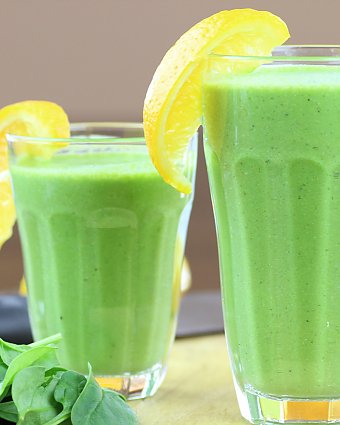
Here is my basic green smoothie recipe that I yammer on and on about in this episode:

  • 3 large bananas (peeled)
  • 2 medium oranges (peeled - use a knife, cut generously around the edges to remove a lot of the white rind as well as the skin)
  • 1 apple (chopped)
  • 1 cup spinach
  • 1/2 cup to 1 cup water
  • 1 tablespoon lemon juice
  • 1 sprinkle cinnamon
  • 1 tablespoon chia seeds

More details here on the recipe page for my go-to green smoothie.

PS: This third podcast episode is dedicated to Jennifer B. for her encouraging post on the Rawtarian facebook page about my new podcast. This one's for you, kid! (Can I say that? I think so. I am almost 30, after all!) Thank you all for your encouragement and for being HERE!

Download Podcast

Click the button below to download the mp3 podcast file.

Download Podcast

Podcast Transcript

Hello, and welcome to episode number three of The Raw Food Podcast. I am your host, Laura Jane, the Rawtarian, and in this episode, I’m going to be talking green smoothies, what’s in them, how do you make them, what do they taste like, and all kinds of tips and tricks about how to make green smoothies work for you in your life. Stay tuned. I’ll be back with you shortly.

Thank you so much for joining me for another episode of The Raw Food Podcast, and today’s episode is all about green smoothies. Are you excited? Well - I sure am!

First of all, I love looking at peoples’ faces when they ask what I eat for breakfast as a raw food vegan, and I tell I them I eat green smoothies. They’ll get a sort of horrified look on their face and they ask me “What the heck is green smoothie? And that sounds awful!” I’ll basically explain that a green smoothie is a blended drink, or a fruit smoothie concoction that you make in your blender, and it is usually compromised of mostly fruit. But there’s some substantial greens in there as well - greens like spinach, or parsley, romaine lettuce, kale, things like that, and when people ear that concept, they get a little freaked out, and they say “Whoa. I could never eat anything like that.”

But I would to challenge people, especially people who are not at all involved in the raw food lifestyle, and I say “Okay. Well, go with me here!”

Let’s think about a strawberry smoothie, you know strawberries, bananas, water, just a bunch of beautiful sweet yummy stuff, maybe some dates to give it even more sweetness. And I’ll say “What do you think? How does that that sound?”  And they will say, “Oh, that sounds good. I love booster juice and all these kinds of blended drinks.” They’re very popular these days, in the mall. Everybody loves to have a big smoothie, or a fruit shake. So I’ll say “Okay, so you’d be willing to eat that right?” And they say “Sure sure!” And I say “What if I took this one sprig of baby spinach, and I drop it in the blender while it’s blending? That would be fine, right?” And they say, “Yeah. You probably couldn’t even taste it.” I say “What if I drop 3 more pieces of spinach in while it’s blending?” They might get a little squinty, and start to be suspicious of me, but I say “It’s all about the ratios.”

What you want to do is get that fruit to greens ratio to be something that you’re more comfortable with, and quite frankly, when we see somebody eating or drinking a green smoothie that just looks vibrantly green, and looks so healthy, to a lot of the non-raw people, it might look a little bit freaky or scary, and kids get freaked out by it too… the “green slime.”

But frequently, if you use the right type of green, it’s not actually going to taste green. It will look green but it won’t have an overwhelmingly green taste. It will still actually taste very sweet if you use a lot of fruit. And I usually like to keep the ratio two thirds fruit, one third  leafy green vegetables.

But one thing I really wanted to explain to you was that you’re not going to want to use just any leafy green vegetable. There are certain leafy green vegetables that have very intense “green” flavors. For example, romaine lettuce and kale will give you a very green-tasting smoothie. So when you’re just starting out with green smoothies, I always recommend going with baby spinach as your green. It’s so awesome for you in terms of nutritional value, but it has a very bland taste that almost is completely overpowered by the other sweet ingredients. So, if I was to take a bunch of fruit in a smoothie, and add 1 cup of spinach, and then blend that… I’m talking about taste test here, so if I was to do that with spinach, 1 cup of spinach, make the exact same smoothie drink, but instead of spinach use kale or romaine lettuce, and if you were to do a taste test on those 2 different cups of smoothies, the one with the kale will be like “Whoa!” intense green flavor, which some people, especially those new to this whole crazy raw food thing, will find too intense. So it’s really important that you’re going to choose the right type of green. I quite often still do use spinach, but I sometimes do crave a little bit less of a sweeter taste, and when I want that, I will go with romaine lettuce or kale. And frequently, too, I will just use whatever green I have on hand, and that might be something different, depending on what I have run out of already. So, that’s just a little introduction to green smoothies and how they taste.

I usually have a green smoothie for breakfast, and I think another reason why they’re so popular is the fact that you can really change them and customize the way they taste. Like I said, I’ll use a different green depending on what I have in my fridge.

Everybody should definitely start with a recipe if you’ve never made one before, and you’re just getting used to making liquid concoctions in your high-speed blender, for sure you’re going to want to start with recipes and try different recipes, and see how they go. But what will happen over time is that, you will realize that most of these recipes have the same amount of soft ingredients, the same amount of hard ingredients and the same ratio of liquid. You’ll kind of get used to thinking like “Well, this recipe calls for X, Y, Z. It calls for an apple, but I don’t have an apple. Maybe I could put a pear in instead.” And then that’s kind of how you evolve into making your own smoothies from scratch. Don’t get overwhelmed; that’ll just happen over time the more you make them.

I ‘ve been raw for about 2½ years now, and I’ve been having green smoothies almost every day for all that time. Forgive me, I’m quite bad at math, but let’s say there’s 365 days per year, I’ve been doing this for 2½ years, that is a heck of a lot of green smoothies! But when you’re just getting started, just find a recipe you like. You may have to try a few, and it will absolutely depend on the type of blender that you have, as well.

Blenders

If you have kind of a cheap blender that doesn’t have much speed and isn’t really blending things up to a very smooth consistency, you might need to use different recipes and different ingredients. For example, me being “The Rawtarian” and me being quite involved in all of this, I did invest in a very good blender, a high-speed blender called a “VitaMix”, and I definitely recommend them. But there’s a lot of different high-speed blenders you could get.

For me, if I would take something like an apple with the peel still on it, chop that roughly, and I would remove the seeds and things like that, when I blend that in my high-speed blender, even the peel is completely blended so that it is so smooth and silky; it’s as though I’ve purchased this blended drink from a mall kiosk. It’s just got that amazing texture that I was never able to get when I used to just have my really cheap crappy Wal-Mart blender, where there’ll be like chunks of stuff, and you wouldn’t have a consistency that was so uniform. It’s so important because you can have the exact same ingredients and put them in a really crappy blender, and it’s going to taste awful because you’re going to have chunks of things, you know pieces of apple peel that get stuck in your teeth, and it’s awful!

Whereas if you get something that is similar to what you’d buy at a mall, they might be able to put raspberries in there, with all those hard gritty grains and still get them quite smooth; it’s just the difference between a little old blender that you have at your house, versus a commercial grade blender which is what a VitaMix, and a BlendTec, and a few of those other high-end blenders are. 

So as you know, if you’re familiar with my style, I am not someone who likes to spend a lot of money easily. Seriously, I’m a very cheap person and I do live on a budget. But for me, making an investment in a VitaMix, which is very expensive, it can be like $500 new; that’s a lot of money and I recognise that. But when you’re using it every day, multiple times a day, It is really worth it. I’m a little bit off track there, but it is important.

The topic I’m talking right now is the ingredients and what you’re going to put in your smoothies, but you’re going to have to choose your smoothie recipe according to the blender that you have. For example if you have a crappy blender, do not put oranges in your smoothies because you’re going to get all that fiber which is healthy, but it’s going to be  chunky and really stringy, and you don’t really want that. So, if you don’t have a good blender, I would recommend definitely having smoothies that have bananas in them, maybe some softer fruits like some canteloupe or things that don’t have a lot of gritty chunks that need to be blended down.

Green smoothie recipe

I’ve been having smoothies everyday for couple of years now, and basically my go-to smoothie is this. Basically, here’s what I like to have in the morning, and I will make  alterations to this recipe, but this gives you the general concept of what I like to have. So I got my Vitamix, and I’m going to peel 3 big bananas (2 to 3 bananas), and I’m going to place those in my blender first at the bottom near the blades. Of course, I’m going to be telling you about the entire recipe, but I’m going to get sidetracked already by telling you that you always want to put the soft ingredients at the bottom near the blades, and anything that’s going to be harder for your blender to mix, you want to put that in at the end. For example, this recipe is also going to have apple in it, but I’m not going to put that right close to the blades; I’m going to put that right at the top. And the reason why we do this is because, we want to give the blender a chance to get going, blend up that banana and there’s going to be liquid, water in there too, so it’s going to be a nice banana concoction going, and it’s going to start to flow and blend. Then, it’s going to suck all the chunkier stuff like chunks of apple, things like that down, but it’s going to do a better job and not get stuck as quickly, if at all which usually does not, because it has this huge base of liquid goodness which has already been liquefied.

So, we’ve placed some bananas, 3 medium bananas in a Vitamix blender. Next, I might add about 1 cup of spinach, and I usually have just baby spinach because I find that’s easier to get organic in my area, so I will put about a cup, or maybe even a cup and a half of spinach.

I will peel a couple of small oranges. Now I’m going to use 2 oranges, and when I peel them, I always peel (when I’m doing it for smoothies) with a knife and I peel a lot of the rind off. Although it’s really good for you and when I’m going to actually just eat an orange, I’ll just peel it with my hands and eat all those white bits, but when I’m putting them in a smoothie, I try to cut them off because it does alter the taste and makes it a little bit more bitter if you leave them on. Don’t be afraid to just generously cut away the peel, and while you’re doing that, cut away the rind around the edges so you might lose a bit of your orange, but that’s okay. So I’m going to do that, and place my 2 oranges in my Vitamix container.

I am going to chop an apple quite rough and remove the seeds, and then place that in the blender. I’m going to put about 3 quarters of a cup of water into the blender container, and it doesn’t really matter when you put that in because the water will just trickle down to the bottom anyway. I tend to just add it last; it’s just what I’m used to doing. 

I always add about a tablespoon, or a little less, of lemon juice to my smoothies, that could be fresh squeezed, it could be a whole lemon instead of 2 oranges; you might put 1 orange + 1 whole lemon that you’ve peeled. Lemon juice is just a crazy thing; it’s a very acidic ingredient to use, and of course nobody likes a super sour taste of lemon when it’s just on its own, but it actually really alters the taste of basically any recipe that you put it in. It helps to keep the tastes balanced out, and I don’t know exactly all the details of what it does, but I know that when I add the lemon juice, it gives a little kick, it’s great, and it has that nice smoothing element to combine all the flavours. So I’m going to add about a tablespoon of lemon juice. You don’t have to add these next 2 things, but I’m just telling you what I tend to have every morning.

So you got the lemon juice in there. I’m just going to put a little sprinkle of cinnamon.
And then lastly, I do use chia seeds, and I add about a tablespoon of chia seeds, usually the whole chia seeds. It will kind of thicken the smoothie a little bit, and give it an interesting silky texture.

So again, I’ve got the bananas, I’ve got the oranges, the spinach, the apple, the water and then those 3 last things, some lemon juice, cinnamon, and chia seeds which of course you could omit if you don’t have or in a rush.

That’s actually going to make quite a large smoothie, and I would drink that all myself for breakfast. Now if you’re finding you’re using those exact ratios, and it may be too thick, or too thin, or whatnot, you know, just feel free to alter the ingredients according to what works for you, especially the water. I might be really rough with the water at first and I put in half a cup, and then it starts to blend and it’s completely blended and done and then I think, “Ooh. That looks too thick!” And I’ll just add little bit more water and then blend up again just for like an additional 5 to 10 seconds. You do have to play with that because as we all know, your bananas might be completely different sizes. Sometimes you get really juicy oranges; sometimes you get those terribly dry oranges…

Conclusion

But that’s an overall concept of a green smoothie, and like I said, there’s a million recipes out there, and if you’re limited by the ingredients that you have in your house, like let’s say you want to make a smoothie right now and you know you only have pears and pineapple, then just go to Google and type in: “smoothie pear pineapple”, see what comes up and just experiment. You will have some hits; you will have some misses. But that’s the only way you’re going to learn by doing and trying.

So, that’s a little bit about what smoothies taste like and how you make them specifically in terms of a recipe. I find that a green smoothie is an excellent recipe to have in your arsenal because it’s great for breakfast, but it also can be really nice as a quick snack, or a dessert, or there’s so many things that I use them for. I mean I usually just have them for breakfast, but sometimes if I ‘m feeling a little bit off, or if I feel like I need something a little bit lighter, sometimes I will have them for different meals very rarely. But occasionally I think “Oh my gosh. I need a green smoothie right now.” 

Of course, it’s a great way to have your greens and it still has that fruity flavor.  Overall they’re an amazing thing to have in your raw food lifestyle. I think most raw foodists do get into them at some point. I think one thing that’s so appealing about the green smoothie is really how quickly you can do it, and they’re very versatile so you can switch it up to alter the taste a little bit depending on your mood and what you’re tired of.

Another absolute favourite element of the green smoothie is how quickly you can consume it. Remember in my sample green smoothie, I said 3 bananas, 2 oranges, an apple, a cup of spinach, and bunch of other stuff. As you know, it takes a lot of time to eat your food. I still do work at an office a couple of days a week, and I have half an hour for lunch, and literally it is hard for me to physically eat all the food I need to eat in that half hour.

It’s pretty funny, because before I went raw, I was a terrible eater, and I would eat a sub, or whatever for lunch, and you can eat those so quickly. But when you’re eating a large volume of food, 3 bananas, 2 oranges, an apple, etc, that takes a long to just chew and get down. That’s the beauty of the green smoothie: it’s actually pretty quick to prepare, and then when you’re drinking it, it can be so fast, as opposed to trying to chew all of those foods. Now chewing is important for your teeth and that kind of thing, but especially in the morning, I find green smoothies super quick and really convenient. So, that’s another reason I think why people will have green smoothies for breakfast in the morning.
 
The most important tip ever

I wanted to leave you with one of the most important tips that I can share with you in terms of staying raw related to green smoothies, and blender used in general. You may have noticed that I do not post any pictures of my kitchen or my house. I am a wonderful person in many ways, but I am not a good housekeeper. I do not enjoy cleaning, I do not enjoy washing dishes, I do not enjoy any of those types of things. I keep a reasonably clean household, but I am not somebody who spends all the free time doing that sort of thing. Instead, I’m here sharing things with you and being more creative, and that’s what I find satisfying, as opposed to cleaning! So where I’m going with this commentary here is a very important rule, but if you can implement this rule, it will make your raw life so much easier. Do not lie, do not cheat, do not steal and do not EVER leave your blender dirty, no matter what is happening. If your house is on fire, you have to clean that blender out before you leave. What I mean by this is, most of us only have 1 good blender, and we use it for a lot of different things, and if that blender is dirty, like for example being used in your fridge to store a smoothie or something like that, don’t do that! It’s going to make it so much harder for you.

First of all, when you’re tired and you want to use your blender, and you suddenly realize it is dirty, it’s already hard enough sometimes to get energy to prepare this complex raw food, so don’t shoot yourself in the foot by keeping your blender dirty.

Secondly, it is a lot harder to clean a blender that’s been sitting around with food in it. So what I did from the very first day that I got my VitaMix, which is really good blender, I told myself that I would never let it sit around dirty, even for like a few minutes. I always make whatever I’m making, then I will pour it into a Mason jar or glasses or mugs. I will pour if I’m making, say alfredo sauce, or something. I will transfer the mixture immediately into a bowl, so get whatever you’re making out of your Vitamix. Then, pour a cup or two of warm water. It can be warm or cold whatever into your Vitamix. Snap that lid back on really tightly, of course, so that you don’t want any liquid coming out of the top, and then just blend that up for like 10 or 20 seconds. It will make the cleaning process a lot easier. So you empty it right away, like as soon as it stops spinning, you empty it, then you throw some water in it, you blend it up for a second or two. Some people actually put soap at that time as well. I don’t tend to do it that way, but you certainly could. Then immediately go to your sink, toss out that dirty water that has been used to clean a lot of the interior of that carafe, and then just go ahead and hand-wash your blender right away.

That, my friends, is an amazing tip. And if you can try to do that as much as possible, get your blender cleaned right away, you’ll be in such a better position. And honestly I’m seriously bad at some types of house-cleaning like vacuuming. I hate vacuuming, but I make it a priority, and it really helps me so much. It’s like one of those important rules in life, which is try to keep your blender clean! And if I ever do an episode on food processing, I have a very good cleanliness tip with that too, but I’ll save that for next time. Perhaps I should make my next episode something to do food processing, so that I can share that tip with you.

Thank you so much for joining me on this Raw Food Podcast, and it was episode 3. I certainly enjoyed myself. I hope you’ve learnt some valuable tips about green smoothies. Do you have any of your favorite green smoothie recipes? I would love to hear from you about that. Thank you again, and that’s it for me!  

You have been listening to the Raw Food Podcast, with your host the Rawtarian. Be sure to visit me at www.therawtarian.com where you can browse over 100 of my absolute favorite simple satisfying raw vegan recipes that you’ll find pretty quick to make and with just a few ingredients and that taste spectacular. While you’re there, be sure to sign up for my newsletter, and once you’ve signed up for that, you’ll get a PDF copy of 11 of my most favorite, most satisfying, most delicious recipes, including raw vegan Alfredo sauce, raw brownies, and whole host of other delicious recipes you can make at home that are raw vegan and taste amazing. Thank you so much for joining me, and I hope to hear from you very soon, and until next time, enjoy your raw adventure.

Raw Food Podcast 02: How To Eat Raw on a Budget

By The Rawtarian

In this raw food podcast episode The Rawtarian provides four tips about how to eat raw on a budget. Big thanks to Rebecca for inspiring this podcast from her comment on  the Rawtarian Facebook page!

To listen to the podcast click on the photo/play button above or save the MP3 to your own computer.

How to eat raw on a budget:

1.  Your buddies: inexpensive items that you keep on hand on time! Example – bananas, oranges, sunflower seeds

2. Eating in season

3. Identify your most expensive raw food items and find a cheaper source

4. Organic and “really raw”

12 Most Contaminated Foods
    •    Peaches
    •    Apples
    •    Sweet Bell Peppers
    •    Celery
    •    Nectarines
    •    Strawberries
    •    Cherries
    •    Pears
    •    Grapes (Imported)
    •    Spinach
    •    Lettuce
    •    Potatoes
 
12 Least Contaminated Foods
    •    Onions
    •    Avocado
    •    Sweet Corn (Frozen)
    •    Pineapples
    •    Mango
    •    Asparagus
    •    Sweet Peas (Frozen)
    •    Kiwi Fruit
    •    Bananas
    •    Cabbage
    •    Broccoli
    •    Papaya

Dirty dozen source: Environmental Working Group

Download Podcast

Click the button below to download the mp3 podcast file.

Download Podcast

Podcast Transcript

Hello, and welcome to Episode 2 of The Raw Food Podcast! I’m your host Laura Jane The Rawtarian, and today we’re going to be talking about how and where to shop raw without spending a fortune. Stay tuned and I’ll be back with you shortly.

Hi, and welcome to another episode of The Raw Food Podcast. Thanks you so much for joining me. I’ve received some amazing feedback from you all about the fact that I’m doing a podcast, and some of you are big fans of podcasts in general, so thank you so much for your encouragement and support to encourage me to record these podcasts. In this episode of The Raw Food Podcast, I’m going to be talking about how and where to shop without spending a fortune. The reason that I am focusing on this topic is because recently on my Facebook page, which is facebook.com/therawtarian, I asked just a quick question about the types of topics that you guys were all looking to find out more about, and this was posted by Rebecca on the Facebook page, and she posted how and where to shop without spending a fortune as something that she would like to hear about. And I thought that was a great topic. So I’m going to focus on that in this episode.

There’s 5 keys points that I think I’m going to talk about in this episode in terms of keeping your raw food budget in reasonable shape. So I’ll just give you a quick intro to the 5 (actually there’s 4, but maybe I can come up with the 5th at the end!).

So the first one, I’ve just call this “your buddies”, and what these are your main raw food staples that you kind of need to have, and that are bulky in the sense that you can actually get full off of them and they’re not too expensive. A couple of examples of my “buddies” in my area would be apples, oranges and bananas. Those 3 things I always have in my house, they’re relatively inexpensive, and they’re really substantial, and I can use them in a lot of ways.

Similarly, in terms of nuts and seeds, a similar “buddy” is going to be sunflower seeds in my area. I live in Canada, but I think it’s common in North America for sunflower seeds to be quite inexpensive. But I’ll talk about that a little bit more later. So that was the first one. The second tip is to simply eat in season, and I’ll talk about of course again. The third tip is to identify the very expensive items that you really do want to have in your diet and find a better source; a cheaper source for those items. The fourth item is to consider whether you really do need to buy: one, really raw, like truly really raw items, of course those are going to drive up the cost a lot because they’re harder to find and also when you talk about budgeting, people will pay a premium for things, and when people will pay a premium for specialty things, companies will charge more for those because they know people really want them and will pay, so considering whether you really want raw, or also whether you really want or need organic. Those are 2 decisions that you can make, and you don’t have to make those 2 decisions all across the board, but you can kind of take each individual purchase and look at it on its own sake and figure out whether or not you want to pay more for those features. That’s a quick overview of what I want to talk about.

1. Your Buddies

I’ll start with that 1st concept of your buddy foods which are just your main staples. And I think it’s very important for you to have these staple foods for a couple of reasons. You need stuff that you can feel like you can just eat and it’s not going to break the bank. So bananas are an extremely amazing product for this reason, because they’re very filling, they have a lot of calories, they’re very good for you, and they’re usually quite inexpensive as well. I haven’t done the math lately, but I think it’s something like 30 cents a banana or something like that which is really great. So, bananas I always have on hand for that reason because, I don’t know about you, but when I’m eating some expensive foods like kelp noodles or cashews, things like that, I sort of feel a little bit of reticence to eat those foods, or almost a little bit of guilt, because I know, “Oh my gosh. This meal is costing me a lot of money. I’d better enjoy it.” and I just have sort of like financially it feels weird when I’m eating really expensive foods, because I’m a normal person and I’m on a budget, so it’s good to have foods when you don’t have to feel that way. But I think we all do need to be conscious, so I’m not going to say that we shouldn’t feel guilty for eating expensive meals, because we can’t. It’s just not realistic to just eat expensive meals every day of the week. So, bananas are great, oranges as well, and apples. So those 3 I always have, and if I run out of them, I have to get more.

What I also find in common with those 3 items, apples, oranges and bananas, they’re all super easy to pack with you. All 3 of those could be thrown into your bag, or your car, and you don’t have to wrap them up or do anything. Apples and bananas are so easy to eat. You can eat them when you’re driving, when you’re sitting at your desk at work, and they don’t require any effort at all. Oranges are a little bit more complicated, because you have to peel them, but those are 3 great staples. And in your area, I know I have people who communicate to me from all over the world, like from Australia, South Africa, and all kinds of places, you may have your staple foods that are… like, I would just say fruit; you’ve got to find some fruit that is cheap, accessible, that you like to eat, and that’s bulky and realistic. Pomegranates are great, but you’ll probably not going to have the time to sit around and peel a pomegranate every time you need a snack. So for me, those are apples, oranges and bananas. It may be different depending on your tastes or what’s affordable in your area.

Now, in the terms of my “buddies” for nuts and seeds, sunflower seeds for me (I haven’t done the math) are so much cheaper than most of the other seeds in my area, like pumpkin seeds are very expensive, so I always have, like, a gigantic plastic container of sunflower seeds. I’m not good with ratios but it’s practically like a 4 litre milk jug, you know like that big, it’s like that many sunflower seeds! I just keep those on hand. They are great to add as filler, so you do want to be careful when substituting certain nuts and seeds for other things, because it can change the taste and texture. Sometimes if I have a recipe that might call for say, 1 cup of almonds, I could say make half a cup of almonds, half a cup of sunflower seeds, and it kind of bulks it up, but it’s a lot cheaper. I do also keep almonds on hand as well, as a “buddy.” In my area, I find that they’re not that expensive, but the price of almonds does fluctuate quite a bit. If you can substitute sunflower seeds, that’s excellent. Also another extraordinarily expensive nut is the pine nut. I don’t ever buy pine nuts. I love them. They’re so delicious, but they’re so expensive, so I’ll substitute cashews for pine nuts. Basically, I think you need to identify some of these key sources like some cheap fruits, and some cheap nuts and seeds that you can keep around all the time and not feel guilty about consuming. That’s the 1st item, so that was me talking about my “buddies”.

2. Eat in season

The 2nd item is eating in season. Can’t stress this enough. I actually live in sort of a farming community on Prince Edward Island in Canada. It’s a small rural place, and there’s a lot farming happening around near where I am, so I feel a little bit more connected than I used to feel when I lived right in a big city. So, I feel like I’m a little bit more on pulse in terms of when things are coming in season and there’s a lot of farmers’ markets, and things like that around here. When you’re somewhere that’s cold, like me in Canada, it’s snowing outside my window right now, those tropical fruits that we all love, cherries, blueberries, well they’re not tropical but you know… pineapples, all those beautiful fresh fruit travels miles and miles, and it’s really at a premium in the winter time wherever you are; it’s like the most distant away from you in terms of time and accessibility.  Obviously, if you see a tiny container of strawberries, and it’s really expensive, you’re not going to buy it.
 
What you want to be mindful of, is in a summertime or whenever things are cheaper, you want to gorge yourself on those. Like I know, when corn, for example, is in season, I buy tons of corn, and I just eat a lot of it. I don’t really like dehydrate it and do anything with it, except for when it’s in season, and when it is cheap, I eat a lot of it so that I get a good fix. Similarly, there are things that I just get excited about when they’re in season. Even summer, I love watermelon, in the summer, there’s gigantic pumpkin-sized watermelons, and they’re really cheap, just get a lot of them. Enjoy it, because realize that it’s probably going to be too expensive to gorge yourself on watermelon at other times of the year, so I think there’s two sides to it. Number 1, you can’t have fresh cherries all year round and not break your budget, so the concept is you’re going to have to avoid the very expensive stuff in order to stay on budget, that’s one side of it. But the other side of it is when things are lower priced, you want to really tap into that and enjoy it so that you do feel that you do get to enjoy those exciting things.

This topic is talking about budget, but sometimes (or at least I do) I’m like “Okay, I know these cherries are ridiculously expensive, but I really want them and I’m really going to enjoy them, so I’m going to get some.” Another good tip, too, is I do this all the time. I see cherries for sale for, I don’t even know, a ridiculous price… $8 a pound or something, but I think I really want some, but I’m not going to buy the whole bag. I’m just going to get one of those bulk bags, the plastic bags that you can put apples and oranges in them and stuff, and take some of the cherries  from the pre-packaged cherry sack that would have cost literally $16 had I taken the whole bag to the till, and I just take a small handful enough that might be like a desert for after one meal or something, just so I can have that pleasure, but I don’t have to spend like $18 just on cherries. So you can still treat yourself but you do have to be mindful of it, and it’s not so much like, “I’m completely tracking everything that’s in season,” but season dictates price. It’s good to have a general sense of what things normally cost. And of course, related to eating in season, if you can find local sources for things, they’re usually quite a lot more inexpensive, but it’s more of a hassle. I totally support eating locally, and eating from local growers, but it can be hard to arrange, in terms of connecting with the sellers, and by all means, it’s great. And you can get some good deals depending where you live, and how well connected you are. That’s was the 2nd section, eating in season, a great budget conscious idea.

3. Identify your most expensive items

The 3rd concept is to identify what are your most expensive items that are really breaking your bank. Of course, if they are things that you think “Well, I don’t really need that anyway,” then you could eliminate them. But something that I have done, as you may have noticed from my delicious simple recipes like the raw cheesecake, and alfredo sauce, and things like that, I really love using cashews to replicate that creamy, cheesy, comforting creaminess. So, cashews are something that I use a lot of, and where I live, they are so expensive. One month, actually in October 2011, I tracked every dollar I spent, not only on food, but on every single thing I spent, and that was very eye-opening experience, one of things I learnt was that I was going to a bulk food store in my area and buying small bulk (filling up a bulk bag) of cashews, and I was doing that maybe once every 2 weeks, and it was very expensive. I realized there had to be a better way, so I kind of just calculated looking at my bill, “Well gosh! I’ve been buying these cashews every couple of weeks for 2.5 years. How much are these… Is this a good price???!!” I had never even thought about it, not because I’m rich, but because I just didn’t think about it. I thought I just need these cashews in order to make me happy and make me stay raw, so I’m not even going to care about the price. But I realized that they were so expensive, and that I needed to find out if I could get them cheaper, and so I don’t buy a lot of food online; I’m not against it, but I just haven’t really figure out  where to do it, and taking the time to look into it. I realized that I needed a better source for cashews, and so what I did was calculate the price that I was already paying in my local community, and I compared that to some online stores. The store that I did end up buying from was called nutsonline.com, and I had a good buying experience with them.

So, I think I basically was able to buy, including the cost of shipping - which was expensive - but at the end of the day , it was pretty much half the price of what I was paying locally. Now I did spend about, I think, $200 or something like that on cashews and I bought a lot, because first of all, I didn’t want to go through the hassle of ordering all the time, but I think it was a better deal for shipping, and you certainly got a reduced rate for buying more. Financially, if you can sort of invest in without having your money tied up in cashews, then that’s a really good way to do it. But I don’t buy everything. The other thing that I bought during that order was actually dried dill spaces. I don’t know why but they’re ridiculously expensive in those tiny jars. I was making dill pickle kale chips all the time and was throwing so much dried dill on there. These little tiny jars of dill were probably like $6. Anyway, when I got my nuts online order, I also ordered 1 pound of dill which didn’t sound like that much to me. It was like $8 which was very cheap I thought, compared to my local price. And there’s a huge container of dill that I got for $8; it was so worth it! [...]

Anyway, you have to be careful, though, you don’t necessarily want to buy all of your nuts and seeds, and stuff online, because a lot of businesses will have some products that are expensive, some products that are cheap. And they kind of assume you won’t do the math on every one, so really all I am buying online is cashews and some spaces, and specialty items that I can’t get locally. But again, what you want to do is figure out what is costing you the most, then see if you can find an alternative. Another thing is, if you don’t mind calling places like what I did, I just called the bulk store that I was buying from and I just said, “Hi, I always buy these cashews from you. Can you tell me over how much they are per pound?” and they had no problem. She ‘d just said,  “Okay, please hold on.” And she looked it up. So it takes a little bit of research, and it will totally depend on where you are located, of course. Anyway, so that was number 3, and the general concept there is figure out what’s costing you a lot of money and see if you can find it cheaper.

4. Raw and organic - choices

Number 4, this could be controversial, but I am a fan of being real and talking about real issues. There are two issues. Consider whether you really want to buy: “raw” products, and similarly, do you want to buy organic produce. These are really big questions, and of course, ideally we would all eat only organic foods and only pure, certified raw foods that would sprout when soaked in water, and all those kinds of things. But I don’t know about you, but financially, that is not realistic. If I actually looked at my bill, even while I am basically cost-conscious, now that I’m eating raw, my grocery bill has literally doubled definitely.  I do eat really well, and I don’t really skimp. I get whatever I want, but I don’t always buy organic, and I don’t always buy raw, especially nuts. Basically, if you are wanting to buy truly raw sproutable nuts and seeds, that is going to be very expensive. You can certainly do that, and all the more power to you if you can afford to make that a priority in your life. That’s great. But for me, that’s not realistic, and I think at the end of the day, it’s not realistic for a lot of people.

And again, you could sometimes get the really raw sproutable seeds that have never been heated, but basically you don’t have to have really raw sproutable foods. The reason why some nuts, for example, would not be raw is most nuts are coming in a hard shell, as you can imagine. In order to get that shell off, they’re very frequently heated using steam and different types of heat, that’s why a lot of them are not raw. You will see the word “raw” on a lot of things nowadays. That word is not really regulated as far as I know unless that’s changed lately, which I doubt. I know there was a group of people advocating for raw certification, but I don’t think anything has happened with that lately. Often, you’ll see the word “raw” on a package, but really that just means it’s unroasted, because a lot of nuts will be roasted. So if it says “raw”, it probably isn’t raw. I would say it’s only actually raw if you’re getting it from someone that you know you can trust online. I haven’t actually bought anything from “The Raw Food World”, but I’m sure that Angela Stokes-Monarch and Matt Monarch, people who are actively promoting things for the raw food diet, I would trust their labeling. But yes, it’s going to be much more expensive if you get truly raw items from trusted sources.

Now on the subject of organic foods, there is a list, and I should put a link to it in the “show notes”. Actually, it’s a common list out there. I forget what it’s called, something like “The Dirty Dozen”. It’s the foods that you really do want to get organic. That’s because these foods are either very absorbent, they will really suck up all the chemicals and stuff that are sprayed on them. Or frequently, it’s the type of produce where you actually eat the exterior of it. For example, a strawberry. You can’t peel a strawberry, you’re just eating the whole berry. So, if there’s chemical on it, there’s no peel or anything to protect it. You can contrast that to bananas, where I usually buy organic bananas as well, but at least with the banana, if it has been sprayed, you could remove the peel off it; that’s sort of 1 layer of protection.

I’m certainly not going to say that an organic banana and non-organic banana are the same, but if I had to choose which one of them to eat, organically, I’d definitely choose the strawberry. It is interesting; I haven’t looked at it lately and I didn’t look at it before recording this. I would like to brush up on it, but I think some common things on there would be green peppers, apples, berries like cherries, strawberries that kind of thing; I’ll put a link in the show notes. And greens. I really do like to get organic greens when I can, and I usually do buy organic greens most of the time. Talking about that number 1 concept of my “buddy foods”, the apples, oranges and bananas, just being open and transparent with you, I don’t always get organic oranges. When I’m using orange, lemon or lime rind, I usually will only zest an organic fruits, but I don’t always buy organic oranges. It also depends on where you live. In my area, and in my town, it is hard to find organic apples; they’re not in-store just because of where I live in. It probably would depend if you live in a bigger area, but it is something to consider. And of course, organic is a lot more expensive than inorganic foods. That is a general overview of some of my thoughts on how to get your raw food bill under control.

Conclusion

Overall though, I think depending on how you were eating previously, raw food is expensive. When you’re dealing with fresh fruits and vegetables, unfortunately, they are more expensive for so many reasons, but partially because of their shelf-life. When you can have a bag of cookies that can sit on the shelf, in a pre-packaged package and they can sit there for, I don’t even know how long, years until it sells! Compare that to some cherries that aren’t going to last for long at all, there’s a lot higher cost for those products. That’s a reality, and I think that it’s kind of a mindset shift, as well. For me, I’ve definitely noticed my budget has gone up. But first of all, it is totally worth it for me to feel so much better in mind and body, to look better, to have more energy so I can accomplish more and do more and feel better. So for me, it is an investment that I am willing to spend. I think it’s very important to look at your budget and think “What is in my monthly budget that is not important or that doesn’t need to be there.” For me, for example, I will spend money on my health, I will spend money on my quality of life in a lot of ways, but I’m not going to spend money on a nice car. My car is worth barely anything, and it doesn’t look great, but it works fine and it’s great on fuel. And it gets me from point A to point B. Everybody has different priorities. But I do believe that it’s very important to value yourself, and the fuel that you put into your body, it’s extremely important. It has so many side effects, not just health but also, just your well-being and your energy, and we all know how great we feel when we have some green juice or just a big bowl of cherries; that just revitalizes you and energizes you, and you will pay more for these healthy foods, but for me it’s something that I’m willing to pay for, and I think that it’s important to realize that.

What I’m trying to get across is that it is going to be more expensive and I don’t want to sugar-coat that, so it is a reality. It’s a case of looking like, well, if I’m going to do this raw food thing, and I’m not going to compromise on it and I am going to spend more on my budget, I want to keep my raw food budget reasonable and do some of these tips that will help to keep it in a reasonable area. But maybe there’s other areas in my budget that don’t need to be expensive, like certain monthly costs that a lot of us pay but we don’t necessarily think about, we can look at other ways to save money or also to earn more money. That’s a different idea as well.
So, as Rebecca wrote on the Facebook page,” how and where to shop without spending a fortune”, I think for all of us, it requires a certain mindfulness of just being aware of prices overall, like, “apples are normally around $2 a pound”, and so if you see it suddenly “Oh my gosh. These are suddenly $3.50 a pound.” You might want to get fewer or that kind of thing. It’s just good to be aware of the general baseline of prices.

I think as well, frequency of shopping is something that can perhaps help or hinder you depending on your personality type. As a household, we generally grocery shop once a week and that, basically we try to get everything we need for that week. I find that for me, it’s important to have that one week cycle, because if I try to go longer, my greens, my lettuce or spinach start to give a little slimy near the end. For me, eating a lot of fresh fruits and vegetables that one week cycle works really well. It’s really good so I really think you want to avoid food waste, like you know just rotten things that going in to the garbage; you definitely want to avoid that. We generally go grocery shopping once a week, and then sometimes I will also stop in on the grocery store to pick up just a few things. Quite often, if I have had a lot of green smoothies or something, I might run out of greens and I might pick that up at the grocery store in between, so if I go grocery shopping on Saturday, I might have to pick up some greens, and maybe a few more apples and things maybe on a Wednesday or something like that.

I think setting up a schedule for yourself, but also realizing that if this is something really important to you, and sometimes you do need a little pick-me-up too if you think you’re really craving something fun and exciting, well go ahead and splurge on something maybe a little bit more expensive, some specialty, tropical fruits or something like that. But it’s good to keep those things as “extras” that can kind of help you curb a craving. You don’t have to have them every time, but you’re certainly can.
I hope that some of those budget conscious tips were helpful for you, and I’ve had a lot of fun recording this podcast actually. It’s taken me a couple of weeks to, probably more than that, just to do this second episode but I’m really excited about it. And again, I really do appreciate your feedback about this podcast, and I hope to be talking to you again soon. Thank you so much for all your support and I hope to see you at therawtarian.com.

You have been listening to the Raw Food Podcast, with your host the Rawtarian. Be sure to visit me at www.therawtarian.com where you can browse over 100 of my absolute favorite simple satisfying raw vegan recipes that you’ll find pretty quick to make and with just a few ingredients and that taste spectacular. While you’re there, be sure to sign up for my newsletter, and once you’ve signed up for that, you’ll get a PDF copy of 11 of my most favorite, most satisfying, most delicious recipes, including raw vegan Alfredo sauce, raw brownies, and whole host of other delicious recipes you can make at home that are raw vegan and tastes amazing. Thank you so much for joining me, and I hope to hear from you very soon, and until next time, enjoy your raw adventure.

Raw Food Podcast 01: Brownies

By The Rawtarian

And now for something completely different... The very first episode of The Raw Food Podcast!

The Rawtarian recorded this podcast for you. Talking about--none other than--raw brownies and the companion icing!

What do you think? (blush)

Should I do another?

Download Podcast

Click the button below to download the mp3 podcast file.

Download Podcast

Podcast Transcript

Hello, and welcome to the Raw Food Podcast. I’m your host, the Rawtarian, and on today’s podcast, I am going to be teaching you how to make raw food brownies using a food processor. Stay tuned, and we’ll be back with you shortly.

Thank you so much for joining me. It’s good to have you here on the Raw Food Podcast. This is episode 1, and I’m very excited to be launching this new concept with you so that I can give you little bit more information in a different format for those of you who enjoy commuting. Or maybe who don’t enjoy commuting, but perhaps do fun sort of commuting, or jogging, or doing all those kinds of things, even cleaning up your house!  I know I do love to listen to podcasts when I’m cleaning my bathroom!

I’m a little bit excited to be here with you today! What I wanted to do is just start with a bang by giving you one of my most popular, most commented on, most forwarded, most loved recipes which is a very simple raw vegan brownie recipe, which is very easy to make and it uses a food processor. And because it is a completely raw uncooked recipe, it’s super quick to make because you don’t have to wait for it in the oven, so it can be a really great recipe to make. I know that in our household, sometimes we even race to try to make it during the time span of a commercial break. It’s not quite that fast, but it’s almost that quick; it’s very very quick.

So, first, I think what I’m going to do here is just to give you a quick rundown of the general ingredients that you need, as well as the general equipment that you’d need so if you have a massive nut allergy, well, you’ll know right now that this is not the recipe for you.

In a nutshell, we are looking at 6 different ingredients to make your raw vegan brownies. We’re looking at some nuts; I usually use pecans. We’re using dates, cocoa powder, unsweetened shredded coconut. Optionally, you can include some honey or agave nectar for an extra kick of sweetness, which might be something you want to consider if you are feeding this to very picky children. And the last ingredient is sea-salt. So those are the 6 ingredients that I’m going to be using. And the only piece of equipment that you need for this is going to be a food processor, and I can explain a little bit about that shortly. And then, lastly you’re going to need some kind of pan, a brownie pan. I usually use a glass 8 by 8 inches something like that. A square glass dish or a pie plate, you can use that; any kind of dish that you’re going to be able to push your brownie mixture down into so that it will hold its shape.

I might as well get started here with the actual ingredients, and what I like to do when I’m making a recipe is, I like to get everything out and put it on the kitchen table or kitchen counter right away, so that I know that I have all my ingredients, because there’s nothing more frustrating  than when you’re sort of halfway through your recipe and you suddenly realize that you’re out of something and my flow will be interrupted.  I’m kind of in the zone to make something, and I like to know right away that I have everything. We’re looking here for 1 cup of pecans. If you don’t have pecans, you could substitute walnuts in this recipe, but pecans give it the nicest, richest sort of best nutty flavor. But if you use walnuts, it will still come out really well because the consistency of using a pecan and a walnut is quite similar; they both sort of oily in a good way. You need those natural nut oils to help get this recipe to stay together. So I would recommend pecans, but if you have to use walnuts because that’s all you have, or because you find, like in my community, pecans are at least double the price of walnuts, you could try walnuts as well. So, 1 cup of nuts.

Secondarily, you’re going to need 1 cup of dates. As you may know, in the raw food community, the most popular and recommended dates are called medjool dates (I hope I’m pronouncing that correctly. I think I am.) and they’re actually found in your grocery store in the produce section. They are a fresh fruit basically, so you’re going to want to find those fresh dates. They do tend to have pits, and they’re kind of like a plum or a peach; they have their pit. So if you are going to use medjool dates, you will want to slice them up length-wise and just pop out that pit that’s inside the dates. For some people, Medjool dates can be perhaps too expensive, or you can’t find them, or you’re just in a rush and you don’t want to have to be bothered with popping up the pits and all that lovely stuff, so some people could certainly use what I call “baking” dates. They are not located in the produce aisle; they are located with the flour and the sugar and the chocolate chips in the baking aisle in the grocery store, so they usually come in a sack of some sort, and they are way cheaper than medjool dates. However, for all of you raw foods out there who are concerned about whether things are raw, generally rather, these baking dates are not considered truly raw because generally they are heated up in order to remove the pits; to soften them and remove the pits, so just bear that in mind. I have made them with both, and definitely using the baking dates is far cheaper and much quicker as well, but if you’re really concerned about having a living food recipe, you’ll want to use the medjool dates.

The next ingredient, the third ingredient, is cocoa powder. In this recipe, I call for 5 tablespoons of cocoa powder.
 
The next ingredient is unsweetened shredded coconut, and I’m calling for 4 tablespoons of that in this recipe. As I mentioned earlier, if you really want to have this super sweet brownie flavor, you could add up to 2 tablespoons of honey or agave nectar. However, bear in mind that dates are already naturally sweet, so you could try omitting the honey, especially if you know that you don’t need things to be super sweet. It will still be nice and sweet without it, so that’s 2 tablespoons of honey or agave nectar. I will jump in as well, there will be show notes at theratwtarian.com in the podcast section, where you can get this recipe all written out. I don’t want you to be madly trying to write these ingredients down, while you’re driving or anything like that!

So then, the sixth and the final ingredient is sea-salt, and that’s just a quarter teaspoon of sea-salt, and if you are new to the raw food lifestyle, you may not yet have sea-salt. It’s actually quite inexpensive and it lasts for a long time. I’m just going to suggest that you throw away your normal table-salt, the oxidized table-salt that we all probably grew up with. Just get rid of that and replace it with sea-salt. It’s not overly expensive, and it lasta for a long time. The flavor is better. And the nutrition is better as well. So that was a quarter teaspoon of salt.

So now, I’m hoping you got all your ingredients, or you will whenever you try to make this recipe. You’ve got all those ingredients and now it’s so simple, it’s just a matter of putting the recipe together, and that can happen very quickly.

In your food processor, I’m going to suggest you just add that 1 cup of pecans or nuts, and pulse that until you get a nice sort of “mealy” kind of texture where it’s all crumbly. You’re going to want the nuts to be reduced to quite small little tiny balls. 

So then, after you have processed your pecans, you’re going to add the 1 cup of dates - and this is something I should mention, about the dates - if you’re going to use the nice lovely fresh medjool dates, those are the perfect texture because they usually still have quite a bit of moisture in them, because they are fresh fruits, and they’re still quite moist. If you are going to be using baker’s dates I’m calling them, so it’s those dry dates that are in the baking aisle, those can be a little bit harder depending on which brand you get, and how long they’ve been sitting on the shelf and all that kind of thing.

If they are super duper rock-hard, you may want to wrap them in a moist paper towel or something like that to make them a little bit more moist. You do not have to do that and, frankly, I do use baker’s dates and they’re really hard, and I  don’t care; I just throw them into my food processor and I’m not really too worried about it. But it is something to consider, the moistness of your dates.

If this is the first time you are making this recipe, don’t even worry about it. Take the dates you have, throw them into your food processor. This is my “get-it-done” philosophy, but let’s not be too worried about it. But when you’re tweaking it next time, if you found that your brownies were a bit dry, maybe you want to play with that… Anyway, I should stop there about dates! So, you’ve added your 1 cup of dates to your food processor, and then you just process again. This can be sort of a violent procedure, because if you have really hard dates, they’re kind of flying around in there but the things will reduce and you don’t need these dates to become tiny. You want to process them until they are just little chunks of dates as opposed to one big date. So process them for quite a while, but you don’t need to make it sort of completely unrecognizable.

So you’ve done your pecans, now you’ve done your dates, and then you’re just going to add everything else into your food processor, so that’s the 5 tablespoons of cocoa powder,  4 tablespoons of unsweetened shredded coconut, and then your honey if you want to add that little dash of salt - the quarter teaspoon. You might also want to note that when you’re putting your cocoa powder in there, put that in there, and maybe manually with your hand or spoon or something, just kind of bury it. Because I find if I left the cocoa powder sit right on top when it spins at the very beginning, the cocoa powder will kind of come flying out at the sides, so it’s a bit of a mess. So just try to bury that cocoa powder a little bit, before you turn the food processor on.

So now you’re going to just process the rest of your ingredients, until basically it just looks like brownie batter. It’s quite amazing when you take it, and add that cocoa and start to process it up. I haven’t given you times, so if you’re not familiar with how long to process things for, the pecans maybe for 30 seconds, the dates maybe 30 seconds, and then this last addition of these remaining 4 ingredients - like when you add in the cocoa powder, the coconut, the honey and the sea-salt- maybe you have another go for about 30 seconds, or maybe a little longer. You just kind of want to wait until that cocoa powder is completely distributed so the whole thing just looks like a beautiful chocolaty dough.

Once that’s done, that’s pretty much it, my friends! All you need to do is, usually depending on your food processor, you’ll pop that blade out of your food processor and set it aside to be washed a little bit later. Then, you’ll just take your brownie pan, and dump the processed mixture into your brownie pan. And, that’s it! So you’re going to dump it into the pan, and then with clean hands (so you should wash your hands), you’re just going to press the brownie mixture down into the pan with your hands. You can do that quite firmly. It’s kind of interesting, you’ll notice that we didn’t add any oil into the mixture, but you’ll find - depending on your nuts especially - that the mixture is actually really quite oily which is kind of neat. It’s just the oils that are released from pecans. So you’re going to push that down really firmly, and it’s going to look like normal brownies. That’s the goal that you’re going for.

I have, I can’t remember how many, there’s like about 80 comments on my recipe post on my website at therawtarian.com. But somebody recently commented that their mixture was not really holding together very well, and I think that if that ever does happen, like you push it down into the pan and it seems still really crumbly…  First of all, I would say push it down as best as you can. Pop that in the fridge for an hour or two, and then see how it’s set up in the fridge. But if you’re making it, and you found that it didn’t really ever set up and it’s still always hard to cut, and you’re not very impressed with it, I think the problem is going to be predominantly a lack of moisture that was the problem, so that could be that your dates were super hard or your pecans were like really old and dried out. It didn’t have a lot of those natural oils, so this is kind of troubleshooting at this point. Normally that doesn’t happen, but I’ve had a couple of people mention that to me, but that doesn’t ever tend to happen to me. Usually, the consistency’s pretty perfect.

So you’ve pushed your brownie mixture down into your pan, and then if you’re probably eager, like me, you can certainly cut a couple of slices off and eat those right away. They’re not going to be as firm as they would be after they have been in the fridge for an hour, so you might find it a little bit crumbly, those first couple of pieces that you snack on right away. But when you put it in the fridge it usually firms up quite a bit. So that’s all it takes.

I think I’ve probably taken about 10 or 15 minutes to explain it you, and that’s practically as long as it takes to make, so in the time you’ve listened to this, you probably could have been making brownies instead! The recipe for this is at The Rawtarian. I’ll put up the show notes there, and just click on podcasts and you’ll find it. This is episode 1, and that’s basically it!

 As I’ve mentioned, or maybe I didn’t mention, that I also have a fabulous brownie icing recipe, and I’ll post up the notes to it as well. Whereas the brownie mixture that I just spoke about was made in a food processor, the icing recipe, you need a good blender, so that would  be something you could consider if you have a good blender, and you want to add another delicious layer on top of the brownies, which would be like a chocolaty icing. There’s a recipe for that on my site, and the gist of that recipe is dates, water, cocoa powder and coconut oil, as well. And that coconut oil is extremely mandatory for that recipe, because what the coconut oil does is it hardens when you put it in the fridge, so the icing mixture is a little bit runnier when you take it out and pour it on top of the brownies. However, it will set up quite nicely. It doesn’t become hard, but it sets up perfectly on top of the brownies and we just love that recipe. And it’s so interesting because you don’t actually need any additional sweetener for that recipe! The icing recipe, like I said, it’s dates, water, cocoa powder, and coconut oil - and just those 4 ingredients, it tastes so fabulous. It’s like a chocolaty, fudgy, lick-it-with-your-finger when no one’s watching. Like remember when you were a kid, your parents would make chocolate icing if you were lucky enough to have a type of parent to do that, and you would lick the “beaters.” I just remember being a kid and having the chocolate icing off the spoon and being in heaven and this is the same. You don’t even need to add any extra sweetener to that icing recipe. It’s just super sweet on its own, and it’s awesome. You’re going to love it.

Anyway, that basically the gist of it. I hope you really enjoy the concept of listening to me talk a little bit more about my recipes. I’m hoping that this podcast can kind of enhance your experience, understanding, and ability to make raw food recipes. It doesn’t matter if you’re vegan or raw, or what you are. If you’re just interested in incorporating more live healthy whole food, delicious recipes that are actually quite simple to make and made with very basic ingredients, I think that these are really important skills that a lot of us did not learn when we were growing up. I know I certainly didn’t learn any of these skills, and it’s been more of learning experience for me as an adult. I really hope these podcasts can help you become a healthy cook at home and make things seem accessible and exciting too. I know that everybody gets more excited when they can taste something really delicious, that’s also healthy as well. It’s kind of this yin yang opposites attract kind of thing, but it’s really surprising and exciting. I’m really happy to be sharing it with all of you, and I love you all when you send me emails and notes and things, so this is just another way to get to know each other and communicate, and help each other succeed with healthy eating. Thank you so much. I’m going to sign off and I really appreciate you listening to me today. I hope this has been inspiring for you. If you do have a chance to make these recipes, let me know and I’d love to know what you think.

You have been listening to the Raw Food Podcast, with your host The Rawtarian. Be sure to visit me at www.therawtarian.com where you can browse over 100 of my absolute favorite simple, satisfying raw vegan recipes that you’ll find pretty quick to make and with just a few ingredients and that taste spectacular. While you’re there, be sure to sign up for my newsletter, and once you’ve signed up for that, you’ll get a PDF copy of 11 of my most favorite, most satisfying, most delicious recipes, including raw vegan alfredo sauce, raw brownies, and a whole host of other delicious recipes that you can make at home that are raw vegan and taste amazing. Thank you so much for joining me, and I hope to hear from you very soon. And until next time, enjoy your raw adventure!

Pages